The Ori Robotics team
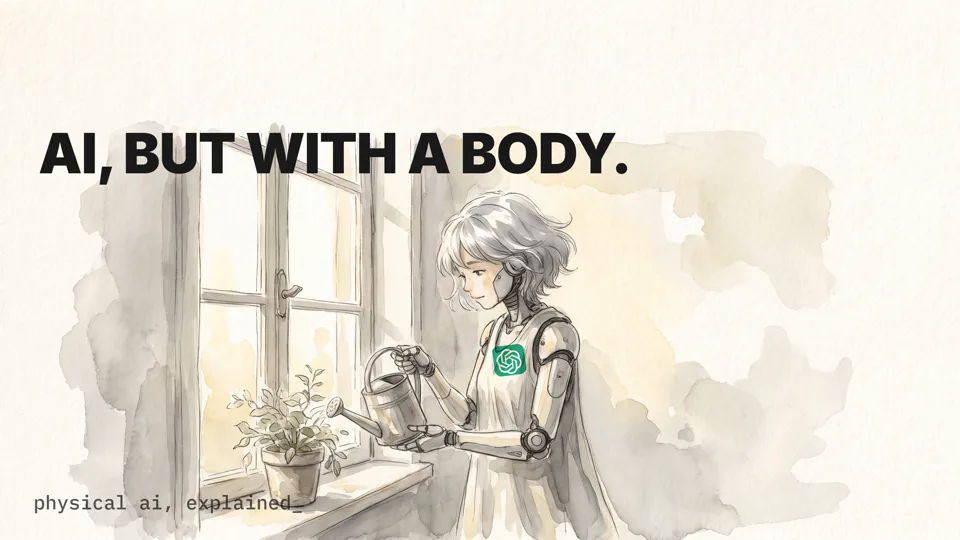
ChatGPT has no hands. It can write you a sonnet about your laundry, but it cannot move one sock. That gap is the whole story of physical AI.
Physical AI is AI with a body: software that senses the real world, decides what to do, and then actually does it. This is the plain-English version, no spec sheets, told through the robots we write about every week.
Talking AI versus moving AI
The AI you chat with lives in text. It reads words, predicts words, and its mistakes cost nothing but a retry. It never meets gravity.
Physical AI has to operate where mistakes have consequences: floors are slippery, rooms rearrange themselves, and the cat moves. Same family of intelligence, completely different stakes.
The loop: sense, decide, act
Every physical AI system runs the same three-beat loop, many times a second. Sense: build a picture of the world from cameras, depth sensors and lasers. Decide: choose what to do about it. Act: move motors, and then immediately sense again to find out what that did.
Our learning series walks the first two beats in detail: how a robot dog sees, and how it turns a wish into motor angles.
Deciding: from scripts to learned behaviour
Old robots followed scripts. Step here, weld there, repeat forever, and heaven help the robot if anything moved. That is automation, and it is why factory robots live in cages.
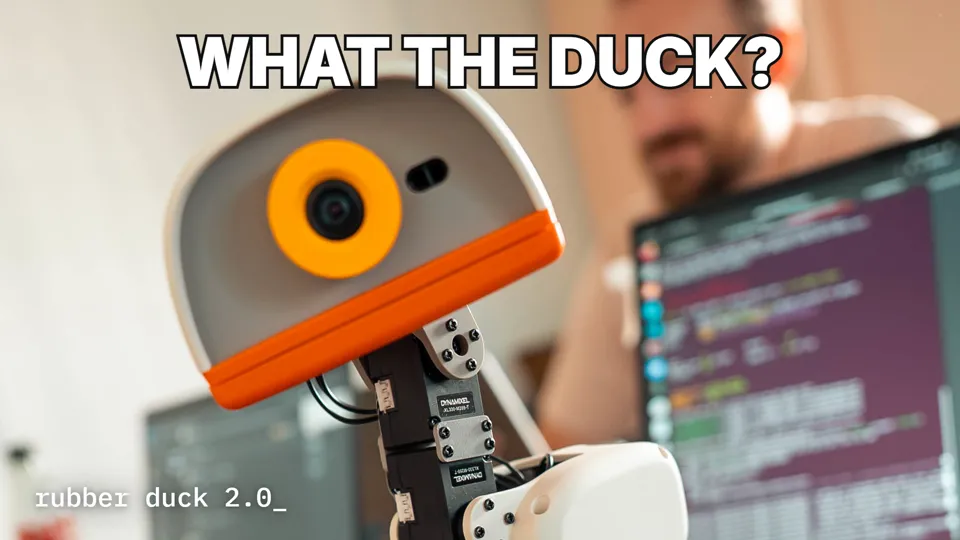
Modern robots learn. They practise in simulation, a physics video game of the real world, failing millions of times at computer speed until a behaviour works, and then the finished skill is copied onto the real machine. Hugging Face's $399 duck learned to walk exactly this way. Nobody wrote the waddle.
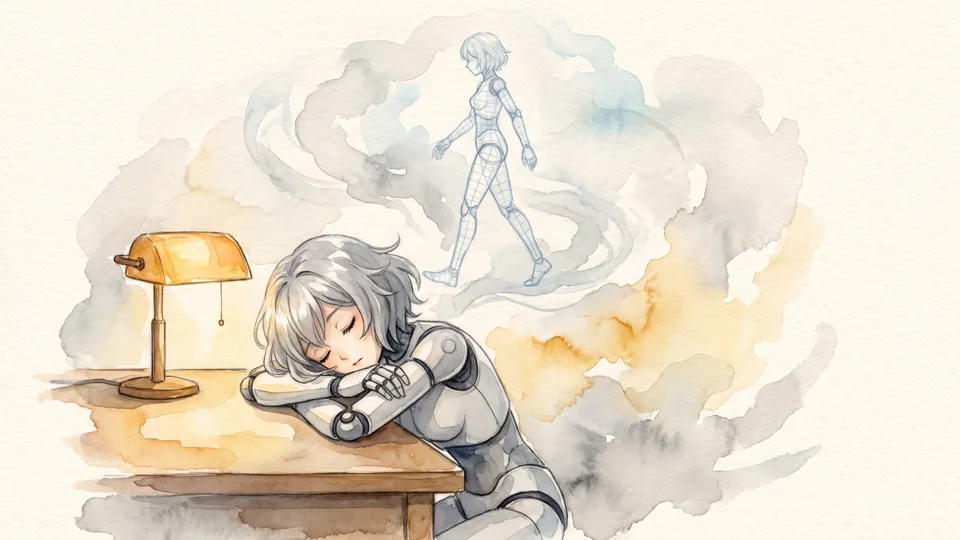
Robots practise in a dream: simulation first, hardware second.
Acting: why walking is the hard part
Here is the strange truth of the field: the things we find hard, like chess and calculus, are easy for computers. The things we find effortless, like walking across a room while holding a cup, are brutally hard for them.
Balance is a fight that never ends, every floor is different, and glass is invisible to most sensors. Walking looks like the robot's party trick. It is actually the PhD.
You already met physical AI this week
If a parcel reached you lately, physical AI probably touched it in a warehouse. Factories run on it. Tesla is building a line designed for a million humanoids a year, and the hottest gadget of the season is a robot duck.
5M
Robots already working in the world's factories (IFR, World Robotics 2026). Physical AI is what lets the next wave leave the cage.
Why it matters if you are not an engineer
Because the machines are leaving the factory cage and entering ordinary spaces: hospitals, warehouses, ports, and eventually homes. Every one of them needs people who understand what the machine can and cannot do.
That understanding is learnable. It is exactly what our course teaches on a real robot dog, and what this blog unpacks one plain-English piece at a time.
Quick answers
What is physical AI in one sentence?
Physical AI is artificial intelligence that senses the real world, makes decisions, and acts in it through a physical body, such as a robot.
Is physical AI the same as robotics?
Robotics is the body; physical AI is the learning mind inside it. Classic robots followed fixed scripts, while physical AI systems learn behaviours in simulation and adapt to the real world.
Why is physical AI harder than a chatbot?
A chatbot's mistakes cost a retry. A robot's mistakes happen in the physical world, where gravity is unforgiving, every room is different, and glass is invisible to most sensors.