The Ori Robotics team
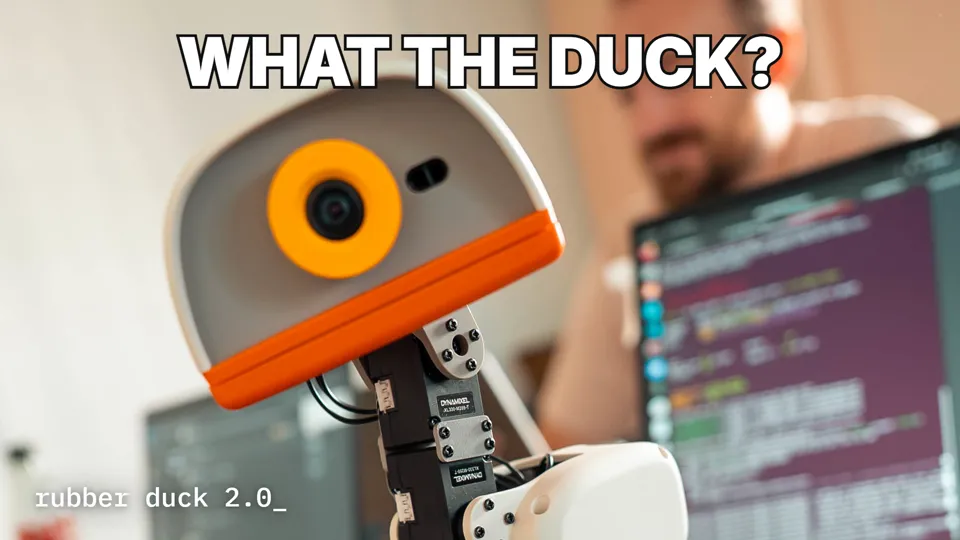
Programmers have talked to rubber ducks for decades. You explain your broken code to the duck, line by line, until you hear the mistake yourself. The duck's whole job is to sit there.
That era just ended. The duck finally talks back, walks, picks up socks, and costs $399.
What exactly is a Microduck?
Microduck comes from Pollen Robotics, the French company inside Hugging Face. It stands 25 centimetres tall, weighs about 800 grams, and packs 15 motors, a camera, a tiny laser depth sensor, and an articulated beak that doubles as a gripper.
The beak lifts a little over 100 grams, which in practice means one sock or one whiteboard marker, both confirmed on video. It ships knowing how to walk, kick a ball, scoop things up and, crucially, get back on its feet after being knocked over. Dignity as a feature.
It learned everything in a dream
Nobody programmed the waddle. The duck taught itself to walk in a physics simulator through reinforcement learning: fall, adjust, try again, a few million times, at computer speed. Then the finished skill gets copied onto the real duck.
The entire software stack is open source, so you can train it new tricks and share them, the same open-robotics world as the $120 arm from day 2 of our learning series. The hardware is not open source, so you cannot print your own duck. They have to sell you the duck.
Then it stole a keynote
On 21 October, at Nvidia's GTC conference in Berlin, Jensen Huang knelt on stage with a laptop, a game controller and four Microducks. The most powerful chip executive on the planet closed his keynote by asking toy ducks to do tricks.
The ducks stomped their feet, made little R2-D2 noises, sat down, somersaulted on voice command and played dead when asked to take a nap. Huang told the crowd they had been trained on Nvidia's own RTX stack, and Nvidia posted the clip with a caption that says it all. It was viral within hours.
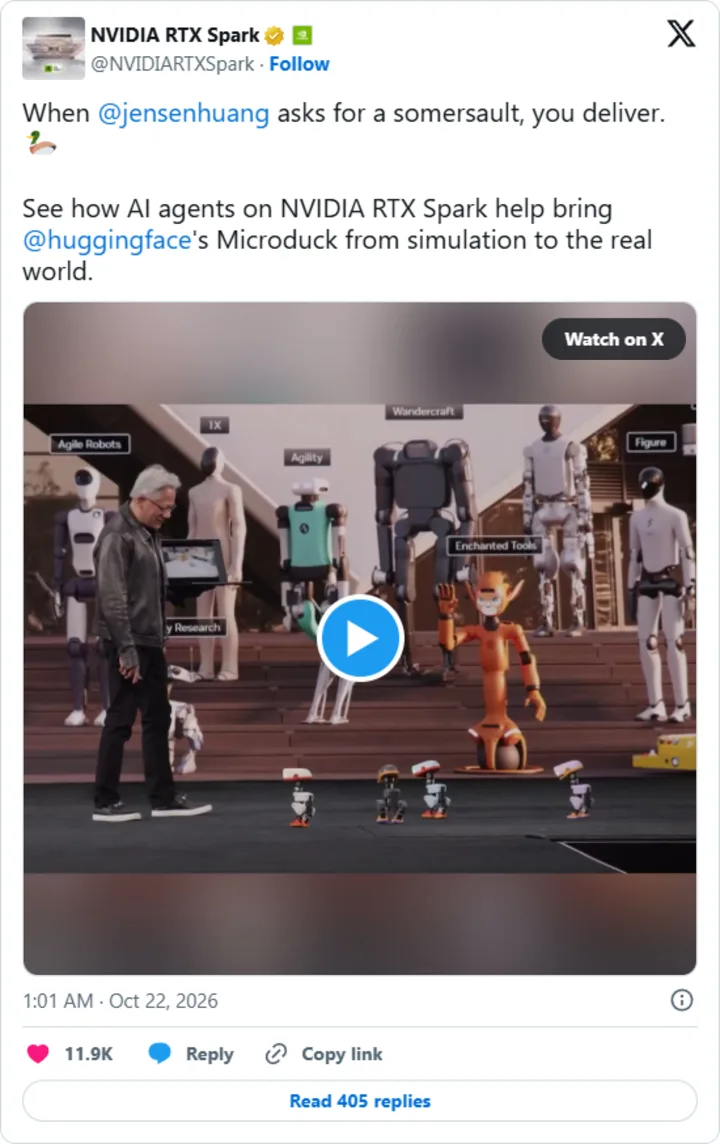
Nvidia's post of the keynote moment. Via X, tap to watch.
20,000
Preorders within a day of the keynote clip spreading, per Hugging Face chief executive Clem Delangue (via TechCrunch).
Why did it sell out so fast?
$399 is games-console money. That makes Microduck the first physical AI product cheap enough, and frankly charming enough, to be an impulse buy. More than 10,000 went in the opening days, over $5 million of duck, and the keynote bump pushed preorders past 20,000.
The queue is now the story. The original promise of delivery before Christmas is gone, and new orders quote four to six months. The hottest robot of the year is backordered into 2027.
What the duck is actually for
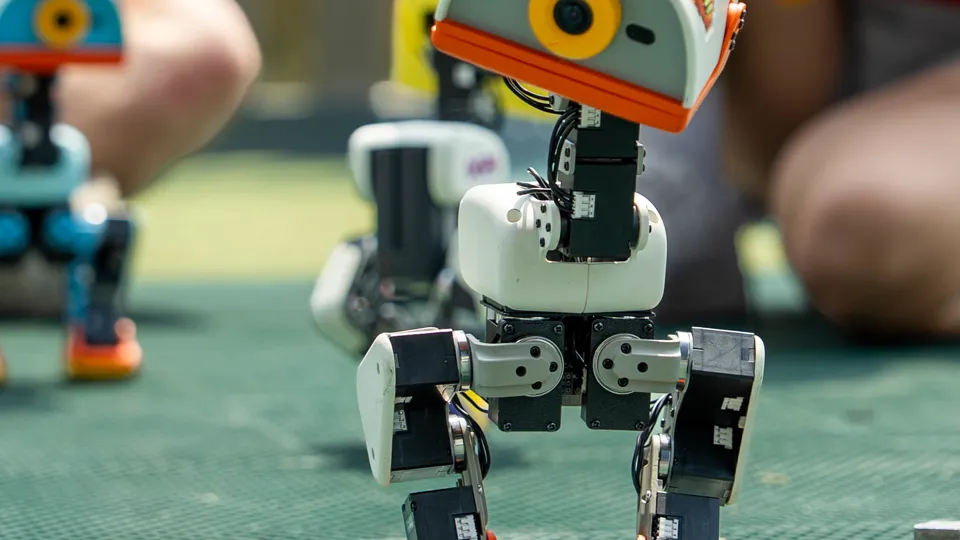
Microducks in the wild. Image: Pollen Robotics
Honestly: nothing, and that is the point. It is a development platform wearing a toy costume, recommended for ages 16 and up. The box includes a game controller. The accessory pack adds roller-skate feet and a laser pointer. This is not a product that solves a problem. It is a product that creates roboticists.
And that is the real signal. Until now, robots were bought by companies, in purchase orders, for warehouses. The first robot that ordinary people queued for, and that a chip CEO knelt next to on stage, is a duck with no job. Demand for personal robots was always there. It was waiting for a price tag and a face.
Our bet: the Microduck is to physical AI what the home computer was to software, the silly, affordable thing a generation learns on. Also, it is a duck.